
What Is a Low Quality Image and Why People Actually Use It
Why low quality images dominate memes, Discord, and Reddit. Discover why compressed images go viral and when low quality is the professional choice.
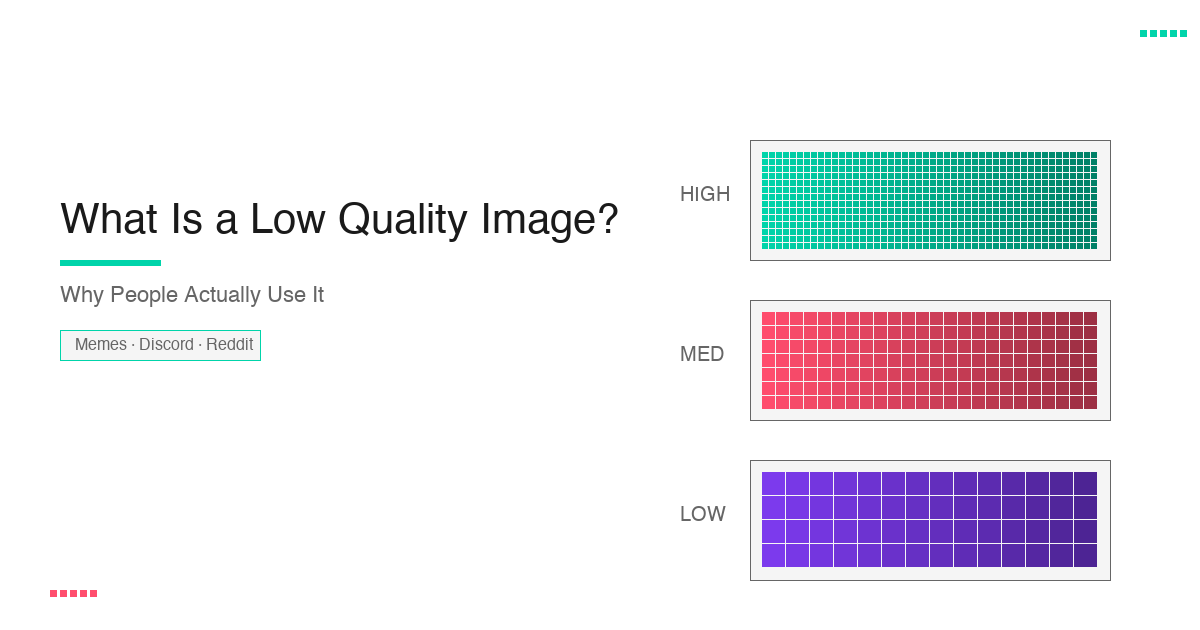
Understanding image quality: from high resolution to compressed formats
Ever wondered why the funniest memes look like they have been screenshot and re-uploaded a dozen times? Or why Discord and Reddit are filled with images that look like they survived a compression apocalypse? There is actually a method to this madness.
Low quality images are not just a technical compromise - they have become a cultural symbol part of internet language and surprisingly an effective communication tool. In this article explore what makes an image low quality why people deliberately choose them and the unexpected reasons they actually work better than crisp high-resolution photos.
What Actually Makes an Image "Low Quality"?
Before diving into the why let us clarify the what. A low quality image typically exhibits one or more of these characteristics:
- Compression artifacts: Those blocky squares and blurry edges you see around text or objects especially in JPEG images
- Reduced resolution: Images downsized to smaller dimensions making details harder to see
- Lower bit depth: Fewer colors resulting in banding or posterization effects
- Pixelation: Visible individual pixels creating that chunky mosaic look
- Color degradation: Washed out or inaccurate colors from multiple saves or aggressive compression
These are usually things image editors try to avoid. But on the internet they have taken on new meaning - they signal authenticity casualness and sometimes even humor.
The Meme Economy: Low Quality as Currency

The worse the quality the funnier the meme - an internet paradox
In meme culture low image quality is not a bug - it is a feature. The more degraded a meme looks the more authentic it feels. This phenomenon has several explanations:
The Authenticity Signal
A crispy high-resolution meme can feel sterile or corporate. But an image that looks like it has been screenshotted on five different phones and uploaded to three different platforms? That is the mark of organic viral content. Each compression layer is like a badge of honor proving the meme has traveled far and been enjoyed by many.
Nostalgia for Early Internet
Many internet users grew up during the dial-up era when images loaded line by line and everything was compressed to save bandwidth. Low quality images evoke that nostalgia - they remind us of simpler times when the internet felt more chaotic and creative and less polished.
The Deep Fried Aesthetic
Deep fried memes take low quality to an extreme - intentionally over-compressed over-saturated and distorted for comedic effect. This is deliberate degradation as an art form. The worse it looks the funnier it becomes turning image quality into the punchline itself.
Discord and Reddit: Where Low Quality Thrives
Discord and Reddit have become breeding grounds for low quality image culture. But why do these platforms in particular embrace compressed images?
Discord File Size Limits
Discord free users face an 8MB upload limit (25MB for Nitro users). This forces people to compress images before sharing especially GIFs and videos. Over time this limitation became part of Discord culture - compressed images are just the norm now.
But there is more to it. Discord communities thrive on rapid-fire conversation. Nobody wants to wait 10 seconds for a high-res image to load when the joke will be buried under 50 new messages by then. Small compressed images keep the conversation flowing.
Reddit Reaction Images
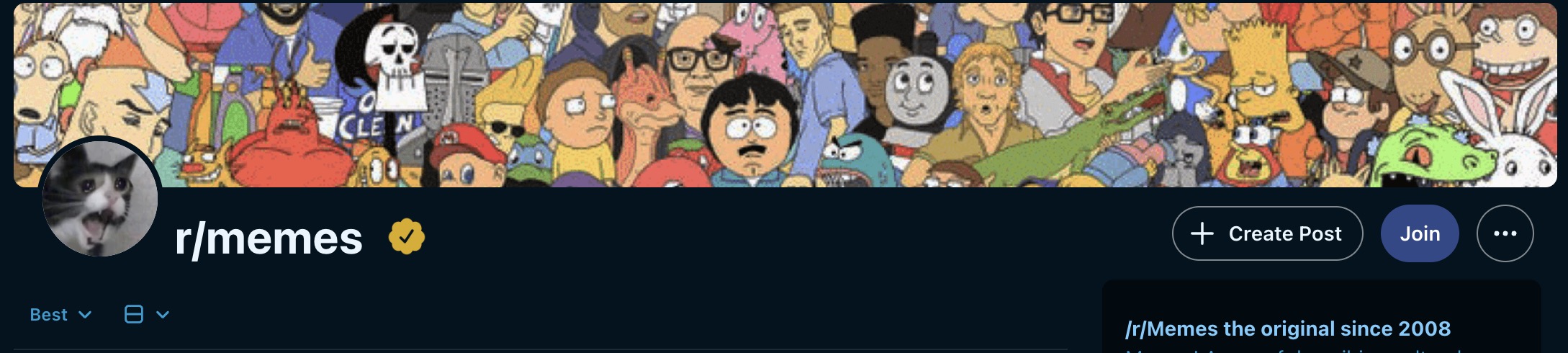
Reddit r/memes: where low quality is a badge of authenticity
Reddit threads are filled with reaction images that have been saved and re-posted thousands of times. Each save-and-upload cycle degrades quality slightly creating a visible history of the image journey. Some of the most iconic Reddit reaction images are barely recognizable due to compression - and that is exactly what makes them perfect.
These heavily compressed images also serve as in-jokes. If you recognize a specific degraded version of a meme you are part of the community. It is digital insider knowledge.
Why Low Quality Images Are More Viral

Compressed images spread faster and feel more shareable
Counterintuitively low quality images often spread faster and wider than high-quality versions. Here is why:
1. Faster Loading and Sharing
A 100KB image loads almost instantly even on slow mobile connections. A 5MB high-res image? That might take several seconds. In the fast-paced world of social media those seconds matter. People are more likely to view share and engage with content that loads instantly.
2. Lower Barrier to Sharing
Smaller files are easier to share across multiple platforms. You can quickly send compressed images via messaging apps email or social media without worrying about file size restrictions or slow uploads. This frictionless sharing accelerates viral spread.
3. Platform Compression Does Not Matter
Most social platforms automatically compress uploaded images anyway. Instagram Facebook Twitter - they all apply their own compression. If you upload a pristine high-res image it will be compressed to platform standards. But if you start with an already-compressed image? You are in control of how it looks rather than leaving it to the platform algorithms.
4. The Authenticity Factor
Polished professional-looking images can feel like advertising. Low quality images feel personal real user-generated. People trust and share content that feels authentic not manufactured. A slightly crusty meme feels like something a friend made not something a marketing team produced.
Low Quality ≠ Unprofessional
Here is a common misconception: Low quality images are unprofessional and have no place in serious contexts. But context is everything. Low quality can actually be the professional choice in many scenarios:
Email Marketing
Email marketers often deliberately compress images to reduce email file size. Large emails take longer to load can trigger spam filters and consume recipient data. A 50KB header image works just as well as a 2MB version for email purposes - and ensures better deliverability.
Website Performance
Professional web developers compress images aggressively to improve site speed. Google Core Web Vitals directly impact SEO rankings and conversion rates. A website that uses appropriately compressed images is more professional than one that uses massive unoptimized files that slow down page loads.
Mobile-First Design
Over 60% of web traffic comes from mobile devices. Professional designers optimize images for mobile screens where ultra-high resolution is unnecessary and wastes bandwidth. Delivering right-sized compressed images shows respect for users data plans and time.
Accessibility Considerations
Users on slow connections in rural areas or in countries with limited internet infrastructure benefit enormously from compressed images. Professional inclusive design means considering these users not just those with fiber-optic connections and unlimited data.
Real-World Examples: When Low Quality Wins
Let us look at concrete examples where low quality images proved to be the better choice:
Case 1: The Success Kid Meme
One of the internet most enduring memes - the Success Kid fist pump baby - exists primarily in heavily compressed forms. The original high-resolution photo exists but the viral versions are all compressed degraded copies. Yet this did not stop the meme from becoming globally recognized and even being used in political campaigns. The low quality version is the iconic version.
Case 2: Discord Gaming Communities
Gaming Discord servers share thousands of gameplay screenshots daily. Most users compress these to 500KB-1MB before posting. This keeps server storage manageable allows quick preview loading and ensures smooth mobile experiences. The communities thrive because content flows freely - possible only with compressed images.
Case 3: Reddit r/memes
With over 30 million members r/memes is one of Reddit largest communities. Analysis shows that posts with moderately compressed images (200-800KB) actually perform better than pristine high-res uploads. Users perceive compressed memes as more relatable and authentic leading to higher engagement rates.
Case 4: Twitter Viral Moments
During breaking news events the first images shared are often low-quality smartphone photos quickly compressed and uploaded. These grainy rushed images spread faster than professional photography that comes later. The immediacy and authenticity of low-quality first-hand images make them more valuable in real-time conversations.
The Psychology Behind the Preference
Why do humans sometimes prefer lower quality images? Psychology offers some insights:
The Effort Heuristic
When something looks too polished we subconsciously perceive it as requiring significant effort and resources - possibly from a corporation or advertiser. Low quality images signal low production value making them feel grassroots and trustworthy.
In-Group Signaling
Understanding and appreciating degraded meme quality is a form of cultural literacy. Recognizing a specific compressed meme template or appreciating deep-fried aesthetics signals membership in internet culture. It is a subtle way communities reinforce identity.
Imperfection as Personality
Perfect images feel sterile. Imperfect compressed images have character. They feel human-made rather than algorithm-generated. In an era of AI-generated content and corporate polish that human touch matters.
When to Deliberately Use Low Quality Images
Based on everything discussed here are specific situations where you should consider using low quality images intentionally:
- Creating memes or humorous content: Embrace the crusty aesthetic - it is expected and valued
- Casual social media sharing: Pre-compress for faster uploads and better mobile experience
- Discord Reddit or similar communities: Match platform norms and file size expectations
- Email attachments or newsletters: Reduce file size for better deliverability
- Quick information sharing: When speed matters more than perfect clarity (receipts screenshots quick updates)
- Retro or nostalgic aesthetics: Intentionally evoke early internet vibes
- Mobile-focused content: Respect data plans and connection speeds
- High-volume content: When posting many images where individual perfection is less important than quantity
How to Create the Perfect Low Quality Image
If you want to intentionally compress images for any of the reasons above how do you do it right? The goal is to reduce file size while maintaining acceptable visual quality for your purpose.
You need a tool that gives you control - not just automatic compression but the ability to adjust quality levels and see results in real-time. That is where a Low Quality Image Generator comes in handy.
A good image compressor should:
- Let you control compression level (so you can choose between smaller file size or better quality)
- Show file size reduction in real-time (so you know exactly how much you are saving)
- Support multiple formats (JPEG PNG WebP for different use cases)
- Work in your browser (keeping your images private - no server uploads required)
- Handle batch compression (for when you need to compress multiple images at once)
Whether creating memes optimizing for Discord or just need to reduce file sizes having the right compression tool makes all the difference between images that work and images that fail.
Conclusion: Quality Is Contextual
The question is not whether low quality images are good or bad - it is whether they are right for the context. In meme culture social media and casual sharing low quality is often not just acceptable but preferred. It signals authenticity enables faster sharing and has become part of digital language itself.
Understanding when and why to use low quality images is a valuable digital literacy skill. It is about matching technical choices to social contexts - knowing that a crusty compressed meme will outperform a pristine version or that pre-compressing an image before Discord upload saves time and data.
Low quality images are not a compromise forced by limitations - they are a deliberate choice that makes content more shareable more authentic and sometimes more effective. The next time you see a hilariously degraded meme remember: that compression is not accidental. It is part of what makes it work.
Ready to create your own perfectly imperfect images? Try our free browser-based image compressor and take control of your image quality - or lack thereof.
Ready to Compress Your Images?
Try our free online image compression tool. All processing happens in your browser - fast, private, and easy to use.
Related Articles
How to Make a Circular Profile Picture for Any Social Platform
Make a circular profile picture for Instagram, Discord, TikTok, YouTube, and more. Crop safely and download a transparent PNG for free.
Make an Instagram 3×3 Grid From One Photo (Without the Order Coming Out Backward)
Split one photo into a 3×3 Instagram grid the right way: prep the aspect ratio, use live grid lines, and post in reverse order so the mosaic does not scramble.
How to Make Deep Fried Memes: Step-by-Step Guide (2026)
Learn how to make deep fried memes with 4 methods compared. From Photoshop to free browser tools — create perfectly crunchy, nuked memes in seconds.